Showing posts sorted by date for query roasted vegetable. Sort by relevance Show all posts

12/30/11

What To Expect From The French Laundry Napa Valley and Wine Pairing

Synopsis: World renown 5 star restaurant is a once in a lifetime experience--around 14 courses of exquisitely prepared miniature dishes that please the eye and palate. Pair light wines like champagne or Pinot as the flavors are delicate.
The French Laundry
Once a laundry, saloon and brothel, now a world-renown restaurant, The French Laundry was founded in 1994 by Chef Thomas Keller in Yountville, Napa Valley. Chef Keller was named "America's Best Chef" by Time magazine and "Chef of the Year" by the Culinary Institute of America plus he won consecutive "Best Chef" awards from the James Beard Foundation. Naturally, The French Laundry is at the top of any foodie's "bucket" list, so I was thrilled that we had reservations after several years of trying to obtain one without success. I must not have been the only first time customer apprehensive about what to expect at this venerable establishment, since The French Laundry website even has a page entitled "What To Expect" where they say "...that's how we try to welcome you--as a guest in a home we love".
Salmon Tartare
Indeed, the place looks more like a home that a famous building, with their sign nearly hidden in the foliage in front. We were early for our 5:30 reservation, so we peeked into the kitchen while we waited for the front door to open. A bevy of chefs were prepping in an immaculate but not ostentatious kitchen. We were welcomed into the restaurant, which continued the theme of modesty with its simple decor. The room was lit with candles and soft light, with comfortable chairs and quality place settings and stemware, but there is nothing pretentious or stuffy about the atmosphere. The feeling is one of warmth and welcome.
We had downloaded and perused the wine list prior to arriving and had decided that wines by the glass would give us a more affordable way to try a number of different selections. The French Laundry wines by the HALF bottle range from $45 to $1,285. We found wine by the glass that fit our more modest budget: the Weegmüller "Haardter Herzog" Kabinett Riesling and the Pierre-Yves Colin-Morey "Les Vireuils" white Burgundy which we thought had an off-taste and exchanged for the HdV "Hyde Vineyard" Chardonnay from Carneros. One can choose between the regular Chef's Tasting Menu and the Tasting Of Vegetables--we had one of each.
Salad Of Hachiya Persimmon
Prior to our first course, we were brought two tiny (about 1" wide) warm gougeres filled with melted cheese--fantastic! Then, two tiny "ice cream cones" of salmon tartare. I unobtrusively took photos at our corner table with my iphone--the light was dim, so the photos are not the best. The salmon cones look large--but they were about 2" tall--just a bite of salmon with a cream interior and crispy shell. Our first courses of the menu were Baked Sierra Beauty Apple for me--reminiscent of an apple betty--and "Oysters and Pearls" for Paul, which was a creamy mixture of tapioca, caviar and oysters--one of the evening's best dishes.
Celeric "Gratin"
Next on the vegetable tasting for me was the Salad of Hachiya Persimmon with heirloom beets and petite greens. The greens were precious--one tiny sprig was the size of half my pinkie fingernail. I liked the sweet persimmon, but the beet slivers were about the size of a slivered almond, so it was difficult to taste their natural rich flavor. Paul's salad was the Salsify "En Feuille de Brick", also with the tiniest bits of salsify, Asian pear, radicchio, walnuts and radicchio. The flavors were lovely but delicate and would have been better with a brut champagne or dry sparkling wine, even though I loved the nectar-like aromatics of the Riesling.
"Caesar Salad"
We switched to a glass of the Maume Gevrey-Chambertin "En Pallud" from Burgundy (a Pinot Noir) and a glass of the Hirsch "San Andreas" Pinot Noir from Sonoma Coast to go with the Celeriac "Gratin", which had a nice creamy sauce that went well with the chestnuts in the dish, and the Sautéed Fillet of New Zealand Medai which had chorizo and piquillo peppers spicing it.
Garnet Yams "En Cocotte"
Paul's next course was a deconstructed "Caesar Salad" with tender lobster "mitts" and a few wisps of romaine. The photo make it look large, but it was in fact a gem-like square about 2" wide plated in the middle of a very large white plate. It comprised a tasty two bites of lobster with a hint of garlic and butter.
Salmon Creek Farm Pork Belly
I had the Garnet Yams "En Cocotte" --a vegetable lover's delight. I was thrilled to see the humble yam given formal tableside service usually reserved for fish or meat. A cart was wheeled to our table with several covered silver dishes. One was opened to reveal Savoy cabbage chiffonaded and gently cooked. It was carefully spooned into the serving dish. Another silver lid was lifted to reveal the yams that had been baking in maple syrup--they were placed on the cabbage, topped with tiny Candy Cap mushrooms, then soaked with the bourbon maple syrup sauce. This was another of the evening's top dishes and paired perfectly with Pinot Noir.
"Calotte De Boeuf Grillée"
Paul's next two meat courses were the Salmon Creek Farm Pork Belly and Snake River Farms "Calotte De Boeuf Grillée" which he declared delicious. My Niçoise Olive "Garganelli" had tubular pasta made from special eggs flown in from Japan. Unfortunately, I could not taste the difference and it seemed a shame to have spent the money for such an expensive ingredient when a locally raised organic egg surely would have made an excellent pasta. I also thought the pasta was a little too "al dente" and this was the only non-dessert dish I was served that I did not devour in its entirety.

"St Nectaire"
The "St Nectaire" was a carefully composed combination of wilted radicchio, truffled bread bits and a prune puree that had less flavor than I would have expected from the name and the listing of ingredients.
"Pecan Pie"
However, the next four courses were the gastronomic equivalent of the end of a fireworks show when all guns are fired for a grand finale. Despite the tiny servings, the number of dishes we had already consumed had already sated us--but the desserts were irresistible. Sorbets were served to cleanse our palate--sour cherry or buttermilk. My buttermilk sorbet was just a spoon's worth, but it was all that was needed. Imagine the brightest, cleanest, freshest taste of dairy hitting your mouth with a flash of cold, then melting away instantly like a snowflake!
Buttermilk Sorbet
The "Pecan Pie" With Verjus-Poached Honey Pears was the perfect amount of sweetness loaded with pecan flavor. Our dessert course was quickly followed by extra treats--warm, fresh miniature donuts, macadamia nuts rolled in chocolate, chocolate truffles with various fillings and an unbelievably delicious "caffe fredo" which was a tiny cup with frozen coffee cream topped with an airy mixture that looked like steamed milk but must have been the lightest foam of meringue. We had been asked about any allergies at the beginning of the meal and I mentioned that I didn't eat chocolate, so I wasn't served the chocolate soufflé--there was no need at this point as I could not have had another bite, no matter how delicious.
Desserts
For wines to pair with the dessert courses, we chose the Oremus Tokaji Aszú 5 Puttonyos and the D'Oliveira Verdelho "Reserva" Madeira--two types of wines we had never tried. I remember my wine class teacher in Culinary School Antonio Gardella rhapsodizing over Hungarian wines and saying that though they are rare in the US, they historically have been considered in Europe as being on a par with French grand cru, so I was very interested in trying the Tokaji Aszú. The grapes are allowed to contract Botrytis cinerea or "noble rot" which concentrates the flavor. The Tokai was lusciously sweet and aromatic as nectar. The Madeira was smoky and woody and did not pair as well with the desserts. Overall, if I could redo our wine choices, I think I would choose a dry champagne for the savory dishes since the flavors were so delicate. Some of the ingredients are served in such tiny amounts, that their flavors were diminished. The sauces were exquisite, but none were strongly flavored. Even the meat dishes would not pair well with a powerful red like a Cabernet Sauvignon as the decisively tasty meat portions were around 2" long and the other parts of the dish prepared with a light touch. I think the Pinot Noir we had paired was as strong a red wine as could be paired successfully with the meal we had. The one exception was the yam dish which was the most powerfully flavored dish and was perfect with our Pinot.
Besides the beautifully prepared food, the French Laundry experience was remarkable for the service. The servers silently and unobtrusively place and remove utensils and plates. We witnessed the graceful choreography as they served all the diners at the adjoining table of eight simultaneously without any fanfare or superfluous movements. Our waiter was knowlegeable and affable, happy to answer our many questions, plus he gave us a copy of the day's menu which is below, plus little bags of yummy shortbread cookies.
However, The French Laundry will have to be third on the list of the best dining experiences in my life behind the two kaiseki meals I had in ryokans in Japan: the Hiiragiya Ryokan in Kyoto and the Kankaso Ryokan in Nara. Multiple courses are served to you in your room, each presented on a priceless dish--an heirloom pottery bowl, a gilt enameled plate, a gorgeous natural stone, an elaborate laquered tray hundreds of years old--and the composition of the food creates a piece of art that complements the serving dish and reflects the season of the year. The tastes are carefully orchestrated to encompass all varieties of cooking techniques, textures, flavors and colors creating an amazing variety in the dining experience. Obviously, the quality of ingredients and technique at The French Laundry are the very best, but the texture of the dozens of ingredients in the savory dishes tended to be the same softness as if everything had been cooked sous vide. The fresh greens that garnished many dishes were so miniature that their texture was barely discernible. That note aside, we had a wonderful meal (which took around three hours to experience) and a once-in-a-lifetime taste of the virtuosity of one of the world's best Chefs.
c h e f ’ s t a s t i n g m e n u | 2 8 De c e m b e r 2 0 1 1
PRIX FIXE 270.00 | SERVICE INCLUDED
6640 WASHINGTON STREET, YOUNTVILLE CA 94599 707.944.2380
_______________________________________
“OYSTERS AND PEARLS”
“Sabayon” of Pearl Tapioca with Point Reyes Oysters and White Sturgeon Caviar
ROYAL OSSETRA CAVIAR
Maine Sea Urchin, White Truffle, Sicilian Pistachio and “Sablé”
( 50.00 supplement )
_______________________________________ 
SALSIFY “EN FEUILLE DE BRICK”
Asian Pear, Tardivo Radicchio, Black Walnuts and Mizuna
MOULARD DUCK “FOIE GRAS AU TORCHON”
Honey-Glazed Cranberries, Pecans, Oxalis and Black Winter Truffle
( 30.00 supplement )
_______________________________________ 
SAUTÉED FILLET OF NEW ZEALAND MEDAI
Chorizo, Littleneck Clams, Piquillo Peppers, Spanish Capers and Saffron “Nuage”
“ST. PIERRE AVEC MOUSSE AU CRABE”
Petite Onions, Nantes Carrots, Tokyo Turnips and “Sauce Bordelaise” ( serves two )
_______________________________________ 
“CAESAR SALAD”
Sweet Butter-Poached Maine Lobster “Mitts,” Caramelized Romaine Lettuce, Garlic Melba and “Bottarga di Muggine”
_______________________________________ 
SALMON CREEK FARM PORK BELLY
Young Fennel, Ruby Red Grapefruit, Sunchokes and Niçoise Olives
FOUR STORY HILL FARM “CUISSE DE POULARDE”
French Laundry Garden Cabbage, Pomegranate, K&J Orchard Chestnut and Black Truffle
_______________________________________ 
SNAKE RIVER FARMS “CALOTTE DE BOEUF GRILLÉE”
“Pommes Darphines,” Chanterelle Mushrooms, Petite Radish, Red Ribbon Sorrel and Green Peppercorn Sauce
_______________________________________ 
“VERMONT SHEPHERD”
Baby Beets, Celery Root and Piedmont Hazelnuts
_______________________________________ 
SOUR CHERRY SORBET
Coconut “Petit Beurre” and Vanilla “Soda”
_______________________________________ 
ALPACO “MOUSSE AU CHOCOLAT”
Spice Pudding, “Panna Cotta,” Fuyu Persimmon and Marcona Almond “Glacée”
“POMMES ANNA”
Funnel Cake, “Pruneaux d’Agen,” Rum “Anglaise”
and Salted Caramel Ice Cream
_______________________________________ 
MIGNARDISES


t a s t i n g o f v e g e t a b l e s | 2 8 D e c e m b e r 2 0 1 1
PRIX FIXE 270.00 | SERVICE INCLUDED
6640 WASHINGTON STREET, YOUNTVILLE CA 94599 707.944.2380
_______________________________________ 
BAKED SIERRA BEAUTY APPLE
Granola, Garden Blossoms and Yogurt Mousse
_______________________________________ 
SALAD OF HACHIYA PERSIMMON
Heirloom Beets, Petite Greens and Spice “Gastrique”
_______________________________________ 
CELERIAC “GRATIN”
French Laundry Garden Celery, K&J Orchard Chestnuts, Gingerbread and Honey-Poached Cranberries
_______________________________________ 
HERB-ROASTED SALSIFY
Poached Quail Egg, Piedmont Hazelnuts, Mizuna and Périgourd Truffles
BUTTERNUT SQUASH “BISQUE”
Maine Lobster “Mitts,” Creamed Hearts of Romaine and Black Winter Truffle
_______________________________________ 
GARNET YAMS “EN COCOTTE”
Candy Cap Mushrooms, Savoy Cabbage, Red Walnuts and Bourbon Maple Syrup
_______________________________________ 
NIÇOISE OLIVE “GARGANELLI”
Cavolo Nero, Jingle Bell Peppers, Spanish Capers, Pine Nuts and Garlic Confit
VIDALIA ONION “RISOTTO”
Hobbs’ Bacon, Nantes Carrots, Shallots,
Scallion Salad and Port Wine Reduction
_______________________________________ 
“ST. NECTAIRE”
Black Truffle “Pain Perdu,” Tardivo Radicchio, “Pruneaux d’Agen” and Sicilian Pistachios
“WELSH RAREBIT”
Cabot “Clothbound Cheddar,” Cauliflower Florets and Bitter Ale Béchamel
_______________________________________ 
BUTTERMILK SHERBET
Oregon Huckleberries and Marcona Almond “Waffle”
_______________________________________ 
COEUR DE GUANAJA CHOCOLATE “SOUFFLÉ”
Banana Ice Cream and Burnt Lemon-Caramel Sauce
_______________________________________ 
“PECAN PIE”
Verjus-Poached Honey Pears, Maple-Brown Butter “Gastrique” and Grains of Paradise Ice Cream
_______________________________________ 
MIGNARDISES

9/8/11

All Burners Firing -- Sautéing: Week #3 Culinary Fundamentals

Chef Frederick is remarkable--the first teacher I've had who knows everything that is going on in his kitchen at all times without ever seeming like he's looking. Nothing escapes him. There can be 20 students busy cooking, but he knows what each is doing--and will call to the person in the back row that the angle of their knife against their steel is wrong, or warn someone at the end stove that their fry pan is starting to smoke--or in my case, he saw that I'd put my leftover Kalamata olive in the food waste bin instead of taking the time to search for the original bottle. I feel ashamed about that error, since I try to "reduce, reuse, recycle" at every opportunity and was more concerned with my workspace being neat than in being industrious enough to find the bottle after a cursory look for it. His keen observation is part of his being a great teacher--the other part is that he is clear, precise and practical about everything he says and does to teach us. He peppers his demonstrations with pragmatic hints on cooking technique from his years of being a chef. For example, have you ever had food stick to your sauté pan when it normally doesn't? It's all about having the pan hot enough before the food hits it. "If it's not sizzling, it's not sautéing."

A recipe from Chef Frederick's Culinary Fundamentals class:
Chicken Tapenade
1 airline breast (boneless breast with wing, up to first joint)
1/2 small zucchini
1 Idaho potato
around 1 cup vegetable oil (we used mix olive oil and canola)
1 Tbsp. butter
*4 garlic cloves, peeled
*1 roma tomato
*1/2 roasted red pepper
*2 Tbsp. capers
*3 Tbsp. Kalamata olives
*3 Tbsp. sundried tomatoes
*2 Tbsp. grated Manchego
*about 1/2 cup chicken stock
Kosher salt
Freshly ground black pepper
*the proportions are roughly 1:1 between the tomato and pepper, then 4:1 between the tomato and the other ingredients, you can adjust as you like. I like capers less, so added less capers.
**cut the top and bottom off

Prep and Mise en place:
Preheat your oven to 350 degrees. Fill a large bowl with ice and water for a ice bath. Have a baking sheet lined with parchment paper ready for the potatoes. Put a small pot of water on the stove to boil. Have two fry pans ready--both need to be safe to go into the oven.
Cooking:
Garlic: Heat a saucepan with about an inch of oil in it to just below the smoke point and place the garlic inside. The garlic should bubble around the edges as moisture releases--keep an eye on it so that it doesn't burn. It should get carmelized to a golden brown color on the outside and be soft all the way through when it is cooked. Remove and set aside. Keep the oil for cooking later.
Potatoes: Cut the potato into wedges and put into a large mixing bowl. In a fry pan, pour some of the garlic oil, add the butter and melt. Pour over the potato wedges, sprinkle with salt and pepper and toss until the wedges are coated on all sides. Place neatly on the baking tray and put into the oven. Bake about 10 minutes, then flip them over. They are done when a paring knife inserted into them meets no resistance.
Chicken: Pour some fresh oil into one of the fry pans to coat the bottom, then heat it until just before the smoke point--you will see the oil thin out and it will make a wave pattern when you tilt the pan. Add the chicken breast skin down and cook until the skin is nicely carmelized and golden brown (about a minute). Flip and cook for a minute on the other side, then put the it into the oven. Take it out when cooked through--about 3 minutes. Remove to a plate and let sit at least two minutes, to redistribute the juices inside, before slicing. Save the fry pan for deglazing later.
Tapenade: Roast the red pepper over a flame until well charred. Put into a container and cover so the steam will help release the skin from the flesh. When cool, rub the charred skin off. "Head and tail"**, slit open and remove the pith and seeds. Mince finely and put into a small mixing bowl.  Cut the stem end of the tomato out and make an "X" slit at the other end of the tomato. Pop the tomato into the boiling water just long enough for the peel to start to detach from the flesh of the tomato. Put the tomato into the ice bath to stop the cooking, when cool, it will be easy to peel the skin off from the top edges of the X. Cut into fourths and cut away the interior part with the seeds, leaving only the flesh of the outer tomato. Mince the tomato and add to the bowl. Mince the capers, olives, and sundried tomatoes, add to the bowl and mix. Taste and adjust, if it needs salt, add more olives. Put the fry pan that cooked the chicken back on the stove and add enough chicken stock to cover the bottom of the pan. Cook over low heat, scraping up the bits on the bottom of the pan and stirring them into the stock. Add the tapenade mixture and cook, adding enough stock to keep it juicy. When the tapenade is heated through, scoop a mound onto your serving plate. Top with the chicken. Add a bit more stock to the fry pan and reduce by at least half.
Slice the half zucchini into rounds. In a second fry pan, add a bit of the garlic oil and fry on both sides until golden brown. Mound a bit of the cheese on each and put briefly into the oven to melt it. Place the zucchini rounds on your serving plate. Drizzle the reduced sauce on top of the chicken. Garnish with potato wedges.
Wine Pairing: If it had been home instead of class, I would have enjoyed it with a glass of the Terredora Falanghina we had on our wine tour in Naples.

4/5/11

Korean BBQ -- A Place Of Plenty In The Torrential Rain

En route to our adventure described in the last post to the Artisan Cheese Festival, we had to endure a 9 1/2 hour drive through torrential rain. The usual travel time is about 5 hours from Santa Barbara to the Bay Area, but that Friday was filled with National Weather Service Flash Flood warnings. The 101 Freeway around Gilroy was crawling at 40 mph with buckets of water pouring from the skies, flooding the roadway and splashing up from the tires creating limited visibility. The sinuous 17, scary on even a sunny day, was worse in the rain with insane drivers determined to plow through its curves at high speed despite the slick conditions.

We had our sights on dinner at a Mongolian BBQ that my daughter knew about in San Jose, but it was impossible to navigate when street signs weren't visible through the diagonal sheets of rain. So, we found the most promising exit for restaurants and turned off, finding the Korea B.B.Q. Buffet (1783 W. San Carlos). Korean food is based on rice, meat, vegetables, tofu and kimchi--a fermented cabbage dish laced with pepper that is either heaven or hell depending on your view. My father loved kimchi, but my mother made him keep it on the porch saying it stunk up the refrigerator and always made a big show of holding her nose when it came into the house. It is odiferous! I love it--crunchy, salty, sour and full of red chili pepper, it goes particularly well with chasuke--rice and green tea mixed together in a bowl. This particular Korean bbq was a meat lover's paradise--I haven't seen so much meat piled onto customers' plates since I was last in a churrascaria! Two long buffet tables of food bisected the restaurant, one of which was laden with meat of every description. Customers had piled their trays with what looked like a week's worth of meat. Each table was built around a grill where one cooked their selections. My daughter took a modest portion, but the waitress didn't approve. She was already miffed that I refused any meat, so she was determined that at least one person at the table had their money's worth. She fussed over my daughter--bringing extra plates of meat and turning each piece over for her until it was suitably cooked. I was happy--I had two servings of glass noodles which I love to make at home (see recipe below) plus some difficult to eat tiny crab legs and shrimp. A novelty was kelp deep fried for just a second, then sprinkled with sugar. The glass noodle recipe below is easily tailored to whatever you have in the frig at the moment--other vegetables and meat can be cooked and sesame seeds or nuts sprinkled on top.
GLASS NOODLES (see bottom of plate in photo at right):
1 (14 ounce) package glass noodles*

1/4 cup sesame oil
1/2 onion, sliced
2 cloves of garlic, minced
1" of ginger root, peeled and minced or 2 Tbsp. canned minced ginger
6 Chinese cabbage leaves, sliced into 1/2"
1 carrot, peeled then shaved into long slices
1 4 oz. can shitake mushrooms, rinsed and sliced
*optional: 1 cake extra firm tofu, cut into 1/2" cubes
1/4 cup soy sauce, approximate
2 Tbsp. sugar
Bring a large pot of water to boil and add the glass noodles, turn off heat and stir noodles so they are completely immersed. Let sit and they will soften in the hot water. In a large frying pan or wok, heat the sesame oil over medium heat and cook the garlic, ginger and onion until softened. Do not let the garlic burn--adjust the heat if necessary. Add the Chinese cabbage, mushrooms, carrot and tofu and cook for a few more minutes, stirring often, until the carrot is cooked but still crunchy. Drain the noodles and add to the pan along with the sugar and half of the soy sauce. The soy sauce measurement is approximate because soy sauce varies in saltiness according to type and brand. You want to find the balance of sweet and salty--so start with half the soy sauce, mix well, taste, then add more soy sauce as needed. Serve warm or cold. Serves 2 as main dish or 4 for a side dish. Pair this recipe with a chilled oaken Chardonnay.
*Glass noodles are also called cellophane noodles, Chinese vermicelli, bean threads, bean thread noodles, or saifun. They are made from mung bean or yam starch and look like plastic threads uncooked and turn clear or "glassy" when cooked.

This week's Online Grapevine special is a sampler of four big, bold red wines, including a Shiraz rated 94 points by Wine Spectator.
Spice up tortilla soup with bold flavors of green chili, onion and tomato. Tortilla chips and melting cheddar cheese top this satisfying soup that can be made meatless for vegetarians or with ground turkey. Pair with the fruit-forward Cedar Knoll 2006 Cabernet Sauvignon, Napa Valley. I devised this recipe when I came home late and wanted something fast and nutritious that would use up salsa I had in the refrigerator. I had the leftover soup the next day without the chips and cheese--adding cooked baby potatoes. It's an easy and fast recipe either way. Makes 2 servings.

GREEN CHILI TORTILLA SOUP:
3 Tbsp. olive oil
2 cloves garlic, minced
1 tsp. oregano
1/2 lb. ground turkey or tofurkey (tofu-based turkey)
10 oz. can green chili, drained and minced or 5 fresh chilis, roasted, seeded, peeled and minced
1 cup fresh salsa (Salsa Fresca--with tomato and onion)
2 cups chicken or vegetable broth
1 bay leaf
fresh ground pepper
salt to taste
2 cups tortilla chips
1 cup shredded cheddar cheese
Heat the oil in a pot over low heat and add the garlic, oregano and ground turkey or tofurkey. Stir and cook until until for 3-4 minutes, separating the ground turkey or tofurkey into chunks. Add the minced green chili, salsa, broth and bay leaf and bring to a boil. Cover and cook for one minute. Remove the bay leaf. Season with a few grinds of black pepper and salt (if needed--I used none). Ladle the hot soup into wide bowls and crumble the tortilla chips on top. Sprinkle with cheddar cheese.

2/24/11

Learning How To Make Sushi From A Sushi Master


Do you love this face? It's one of two baby harbor seals being cared for at the Santa Barbara Marine Mammal Center, which has the highest success rate of any marine mammal rescue center worldwide, with 90% of the animals successfully saved. Founder and marine biologist Peter Howorth runs this center on grants, donations and volunteerism. They had a fundraiser last fall, where we got to meet Philippe Cousteau and won a personal lesson on how to make sushi.

A volunteer from the Center, Ashley, works at Sakana Sushi in Montecito. She brought the amazing sushi chef Teru to show us how to make sushi. He was very generous with his time and top quality ingredients! We had mounds of delectable sushi for lunch and dinner and went with them afterwards to see the baby seals.
TERU'S SUSHI RICE RECIPE:
Matsuri brand rice
1 cup vinegar
150 gm sugar
30 gm salt
small piece of konbu (about 3" long)
dash of Yuzu, optional
Cook the rice per directions. Gently simmer the vinegar, sugar and salt for ten minutes. Put the konbu in and let cool. You can add a dash of Yuzu (Japanese citrus juice). Mix the rice and vinegar mixture. (see this post to see how to mix them properly so the rice is not mushy--the rice should have texture--like "al dente" pasta)

HOW TO CUT FISH FOR SUSHI:
1. Always cut across the grain.

2. Salmon is cut into blocks that are four fingers wide. Trim the fillets so they are four fingers across, then cut them into four finger wide squares. Then slice them.

3. Other fish, like yellowtail: cut the fillets into long triangular pieces, then cut the slices at a diagonal. It's a little hard to see in the photo, but notice that the yellowtail fillet is triangular and you can see the diagonal cut at the end.


 STEPS IN MAKING SUSHI:
1. Take a small bit of rice in your right hand and gently roll it into a loosely packed ball using the index, middle and ring fingers against the palm of the hand.

2. Place the fish slice in your left hand and use your right index finger to daub a bit of wasabi onto the fish.

3. Put the rice ball on the fish (in your left hand) and press it down with the left thumb. Use the right thumb and index finger to squeeze in the sides of the rice to shape a rectangle.

4. Turn the sushi over on your left palm and hold the top of it with your left thumb. Curl your left index finger over the end of the sushi to keep the straight edge and use the right thumb and index finger to shape the sides of the sushi. Turn it 180 degrees (still fish-side up) and repeat.


*The goal is to make the sushi rice into a rectangle that is slightly wider on the top, like this diagram. The left index finger in step #4 is instrumental in making this slope on the short sides of the rectangle.

5. I didn't get a shot of this, but the finishing touch is to put the sushi fish-side down into the right palm and cup the palm so it slightly rounds the top of the fish.

Thank you so much, Teru-san and Ashley from the Santa Barbara Marine Mammal Center for the tour and the lesson on how to make sushi!


Beet salads are popular on the menus of fine restaurants. Make yours at home and enjoy with the 2009 Healdsburg Ranch Un-oaked Chardonnay.
ROASTED ORANGE AND PURPLE BEET SALAD WITH ARTICHOKES:
2 each orange and purple beets
2 artichokes
spray olive oil
juice and zest of 2 oranges
1/4 cup olive oil
1 tablespoon white vinegar
2 Tbsp. lemon juice
1/8 tsp. freshly ground black pepper
1/2 tsp. salt
1/8 cup microgreens
1/8 cup chopped fresh basil

Heat the oven to 350 degrees. Cut the root end and leaves off each beet. (Save the leaves: chop, steam and season them with butter and lemon pepper for a healthy hot vegetable side dish) Cut each beet in half, spray with oil, then wrap in tin foil. Cut the artichoke in quarters, remove the thistly inside and cut off the sharp ends of the leaves with a sharp knife. Rinse, shake and pat dry, spray with oil and wrap in foil. Roast until soft, about 1 hour. When the beets are cool enough, peel off the skins and slice them. Mix the orange juice, zest, olive oil, vinegar, lemon juice, pepper and salt and add the beets and artichoke quarters. Mix gently, then plate with microgreens and the fresh basil.

UPCOMING EVENTS!

Kitchen, Notebook, Memory: A Writing Retreat Inspired by the Five Senses
Saturday, March 19, 2011, "Bambooland," Santa Barbara, CA
Led by Chris deLorenzo, this writing retreat with workshops is for all levels of writers. Set in a beautiful Ryokan-styled home surrounded by lush Japanese gardens and koi pond, we are sure to find our muse, especially since we will be regaled with the fabulous aromas and flavors coming out of Chef Skip's kitchen! (read my post on him here)


5th Annual Artisan Cheese Festival
Friday, March 25-Sunday, March 28, Petaluma, CA
Tickets are selling out fast for Farm Tours on Friday--the Giacomini family will show off their cheesemaking operation, followed by a multi-course meal with local wine, produce and CHEESE! Saturday's seminar choices include curd-stretching, the world of mold, wine pairing, transhumance (traditional cheesemaking from herds moved to seasonal pastures) and...aahh...more cheese.
(read my post from 2009 here)

1/20/11

Charlie Parker's Dry Creek Kitchen And The Buttery Soft Sheets Of Hotel Healdsburg

San Francisco architect David Baker, designer of the the Hotel Healdsburg, married art with comfort. The elegant lines and earthy palette please the eye, while one's sense of touch is pampered with the buttery soft sheets, deep pillowy couches and deep soaking tubs. Through my current and past jobs, I've been fortunate to stay at many wonderful resorts and hotels, many with lavish spas, golf courses and amenities, but this boutique hotel satisfies my craving for serenity like no other lodging. The beds are so comfortable--those buttery soft sheets!--that all I want to do is sip tea, read a book and enjoy the Zen like tranquility of the space. The architecture and the furnishings are stunning, with poured concrete floors, handwoven Tibetan rugs and contemporary art, but the hotel is without pretense or stuffiness.
elegance+comfort=perfection  
They also "got it right" with their environmental sensitivity winning them a 4 Green Eco-Leaf Rating, which proves that luxurious doesn't have to mean wasteful. I've pinched a few photos from their website and included mine of the ahi tuna.
The hotel is right on the main square of Healdsburg, so you can pop out of your room into the crisp air to stroll the town and enjoy a number of good restaurants, including Charlie Parker's Dry Creek Kitchen in the hotel itself.  Included in our lodging package was a six course meal. The Chef's Menu encompassed Seared Hawaiian Ahi Tataki with local watercress, Roasted Celeriac Soup with Black Truffle Flan, Warm Dungeness Crab Fondue with Sourdough Blini, Pan Roasted Crispy Striped Bass with Lentil Ragout, American Kobe Flat Iron 'Au Poivre (a vegetable tart for me--the non-meat eater), and choice of dessert, for me, the light puff of Meyer Lemon Cheesecake with a delicate Burnt Orange Meringue. As the recipe below indicates, the detailed preparation of each dish in the Dry Creek Kitchen is astonishing.
For the adventurous pastry chefs among you, try this recipe from Dry Creek Kitchen's Pastry Chef Yulanda Santos.
Apple Pie Ice Cream, Brown Sugar-Cave Aged Wisconsin Cheddar Cheese Streusel, Vanilla Yogurt Pound Cake, Apple-Fig Cream, and Spiced Cotton Candy Paper:
For The Apple Pie Ice Cream:
1.09 kilograms whole milk
345 grams heavy cream
70 grams dry milk
2 grams salt
½ grams ground cinnamon
½ grams powdered ginger
nutmeg
100 grams dried apple rings
100 grams candied apples
8 grams PreGel Neutro (Stabilizer)
170 grams Sugar
30 grams trimoline
70 grams dry glucose
150 grams caramelized white chocolate
For The Brown Sugar-Cave Aged Wisconsin Cheddar Cheese Streusel:
120 grams cold, diced Butter
140 grams brown sugar
140 grams high gluten flour
160 grams cave aged Carr Valley Wisconsin shredded cheese
For The Vanilla Yogurt Pound Cake:
214 grams all-purpose flour
7 grams baking powder
3 grams salt
136 grams yogurt
194 grams Sugar
148 grams eggs
1 teaspoon Nielsen-Massey Madagascar Bourbon Pure Vanilla Bean Paste
90 grams canola oil
PreGel Fig Arabeschi
Spiced Cotton Candy Paper:
2 cups PreGel Magic Sugar (Isomalt)
½ cup water
1 cinnamon sticks
1 star anise
Cinnamon oil
Cardamom oil
For The Apple-Fig Cream:
200 grams peeled and cored apples
50 grams honey
50 grams PreGel Fig Arabeschi
50 grams low acyl gellan gum
2.5 grams salt
To Assemble and Serve:
Fresh figs
Fresh slices of apples
PreGel Fig Arabeschi
How to make the Apple Pie Ice Cream:

Heat the milk, cream, dry milk, salt, cinnamon, ginger and nutmeg together until just below a boil, then remove from the heat. Steep the dried apple rings and candied apples in the hot milk mixture. Meanwhile, combine the sorbet stabilizer with the sugar and set aside. Heat the milk to 86ºF, then add the inverted sugar and dry glucose. Continue heating the mixture until it reaches 104ºF, then add the egg yolks. When it reaches 113ºF, add the sugar-stabilizer mixture. Cook the mixture to 185ºF, then remove from the heat. Chill and then refrigerate. When the mixture is cool, spin it Carpigiani ice cream machine.
How to make the Brown Sugar Cave-Aged Cheddar Cheese Streusel:

Preheat the oven to 320ºF. Combine the butter, brown sugar, flour, and cheese in the bowl of a standing mixer with a paddle attachment. Paddle all the ingredients together until they are all thoroughly incorporated. Refrigerate the mixture for 30 minutes. Bake the streusel until lightly toasted, then remove from the oven and allow tocool.
How to make the Vanilla Yogurt Pound Cake:

Preheat the oven to 300ºF. Spray a loaf pan with non-stick spray and line the bottom of the pan with parchment paper. Sift the flour, baking powder and salt together. In a separate bowl combine the yogurt, sugar, eggs, and vanilla paste. Stir the yogurt mixture into the flour mixture, then fold in the oil. Pour the cake batter into the prepared loaf pan. Bake for approximately 30 minutes. Remove the cake from the oven then layer with the PreGel Fig Arabeschi.
How to make the Spiced Cotton Candy Paper:

Heat the PreGel Magic Sugar, water, cinnamon stick and star anise in a pot until the mixture reaches 310ºF. Cool the mixture on a Silpat. When the mixture has cooled, grind in a spice grinder. Seal the ground mixture in an airtight container with a drop of cinnamon and cardamom oil. Make cotton candy using Koerner cotton candy machine. Roll the cotton candy very thin using a pasta machine or rolling pin to form “paper.”
How to make the Apple-Fig Cream:

Cook the apples with the honey in a medium pot until they are tender. Blend the warm apples and purée with the fig puree, low acyl gellan gum, and salt. Strain the mixture.
To Assemble and Serve:

Slice and plate a piece of the vanilla yogurt pound cake. Top with a quenelle of the apple pie ice cream. Place a piece of the spiced cotton candy paper diagonally against the cake. Drizzle the apple-fig cream around the dish and sprinkle with the brown sugar cave-aged cheddar cheese streusel.

With most of our country under a blanket of snow, a piping hot soup is in order! Simple to make; add cheese and crackers (try Mozzarella or Provolone) for an easy meal. (recipe includes a vegetarian option)

Mushroom Barley Sausage Soup:
4 Tbsp. olive oil
2 cloves minced garlic
1/4 minced onion
1 cup sliced button mushrooms
2 Italian sausage, sliced (vegetarians use the Field Roast Italian*)
6 cups vegetable broth
3/4 cup barley
1 bay leaf
1/2 tsp. oregano
1/4 tsp. turmeric
1/8 tsp. pepper
1/2 tsp. cumin
1/2 tsp. salt
In a large pot, sauté the onion, garlic, mushrooms and sausage in oil until onion is transparent, stirring continuously. Add broth, spices, potato, carrots, tomato, and barley and simmer for 1/2 hour. Pair with Mozzarella or Provolone cheese and the luscious 2006 Kestrel Co-Ferment Syrah which is featured in this week's Online Grapevine.

*Field Roast vegetarian sausages can be found at most natural food stores.

10/28/10

White Wines From The Old World And New

Growing season in Southern California is year round, but some vegetables susceptible to chill start dying off in the fall. My next-to-last harvest of eggplants and tomatoes included heirloom varieties of white and yellow eggplant (White Beauty and Thai Yellow Egg) from Hirt's Gardens seed company. Browse the Hirt's website for unusual varieties of vegetables, fruits and flowers--like these miniature Mexican watermelons that are only 1-2" at maturity and the fractal-like Romanesco broccoli.

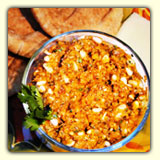
An invitation to a dinner party spurred me to whip up this appetizer with eggplant, tomato, garlic and cilantro from my garden:
ROASTED MEDITERRANEAN VEGETABLE APPETIZER:
3 cups eggplant (about one large globe or a half dozen Japanese eggplant)
2 cups ripe tomato (about one giant heirloom or 7 Roma tomatoes)
4 cloves garlic
1 Tbsp. basil
spray olive oil
1/4 cup olive oil
1/4 cup minced cilantro
juice of 1/4 lemon
1/4 cup pistachio nuts
1/4 tsp. freshly ground pepper
salt to taste
Preheat the oven to 350 degrees. Boil a pot of water and pop the tomatoes in for a minute or just until the skin bursts, remove, cool, seed and slice them. Peel and coarsely chop the garlic--not too small so the pieces do not crisp in the roasting process. Peel and cut the eggplants into bite sized pieces and lightly salt them. Spray a baking pan with olive oil and spread the tomato slices and eggplant on the bottom. Press the garlic into the tomatoes and spray the top well with olive oil. Sprinkle the basil leaves on top. Bake for about 15 minutes, or until the tomato is soft. Stir the vegetables together and bake another 45 minutes, stirring occasionally. When the eggplant is soft and the juice from the tomato absorbed, remove from the oven to your serving dish. Stir in the olive oil, cilantro, lemon, pistachio nuts and pepper. Wait to add salt to taste, as it may not be necessary.

Serve with pita wedges, a soft cheese like Brie or Fontina, and a crisp, refreshing glass of the 2008 Carmichael "Grigio e Bianco" Pinot Grigio or 2009 Rex Hill Pinot Gris--both available from Touring and Tasting for purchase with FREE shipping on or before Nov. 3rd.

Thanksgiving Wine Pairing 101
This is the first in a four part series:  
What To Pour With Your Thanksgiving Feast
  1. Today: Light And Crisp White Wines
  2. Nov. 4: Fruity And Medium Bodied Red Wines
  3. Nov 11: Oaked Or Full Bodied White Wines
  4. Nov 18: Rich And Powerful Red Wines

For perfect Thanksgiving wines, there are some easy guidelines, backed by science and years of tradition. However, your own taste and preference takes precedence--if you prefer Cabernet Sauvignon with turkey or Chardonnay with everything, then your taste buds rule!
Here are some basic guidelines:
  • Balance oils and butter fat with acidity--heavy gravies and sauces rich with butter and oil will be overwhelming with a viscous, buttery-tasting wine liked oaked Chardonnay that has gone through malolactic fermentation. The wines in our free shipping special were chosen to have crisp acidity to balance heavy food.
  • Match the texture and intensity--light and medium bodied wines go well with lighter meats, such a turkey or fish, a bold red wine would overpower the lighter foods, for example, a powerful Zinfandel overpowers delicate foods but finds its match in spicy bbq ribs. The texture of a wine matters: the mouth-feel and weight should complement the food. Medium-bodied whites such as this week's wine special will do well with soups, vegetables, rolls and turkey.
  • Look for complementary flavors--just as one squeezes a bit of lemon on fish, a crisp wine with a lemony zing will refresh your palate between bites. The slight saltiness of ham will be balanced with a wine with fruit forward taste like the Challenger Ridge Viognier.
  • Avoid known mis-matches--the science behind taste has discovered the chemical compounds behind flavors. For example, limonene in creates a citrus flavor. So, knowing some science can help us avoid some bad matches: iodine in fish reacts with tannins in red wine to give an unpleasant metallic taste. Artichokes contain cynarin that makes a wine paired with it taste cloyingly sweet, unless they are cooked in a deep-fryer, which neutralizes the cynarin--a good reason to pair them with a robust, tannic Sangiovese. Other traditionally avoided pairings are dry wines with very sweet foods which will make them taste bitter, herbal or grassy wines like Sauvignon Blanc with red meats, and Cabernet Sauvignon with white meats.
Good wine pairings with Pinot Grigio: pastas with cream sauce, crabcakes, prosciutto and melon, smoked salmon, hazelnuts, cream of vegetable soup, risotto, or scalloped potatoes or vegetables, turkey.

Good wine pairings with Viognier: chicken and turkey, grilled fish, apple salad, dishes with cinnamon.

5/31/10

Japanese Food Wine Pairing -- Seasonal Flavors


In the '80s, the mini-series "Shogun" was a big hit. My father, who was Japanese, and Japanese friends had little regard for it due to the many inaccuracies and anachronisms it contained. Most glaring was the idea that a noblewoman could have fallen in love with one of the foreign men of that time. Cleanliness has always been a top priority for Japanese, they bathed every day and scrubbed their houses clean. Europeans in the 1500s rarely bathed, perhaps once a month if they were wealthy and once a year if they were poor. The streets in Europe ran with raw sewage and heavy perfume was used to mask body odor. The Japanese were horrified by the foreigners lack of hygiene and called them nanban: "barbarians".  Besides cleanliness, Japanese value visual harmony, artistry and simplicity; these values are reflected in their cuisine which is always presented as a feast for the eyes as well as the palate. Their art and culture revolve around the appreciation of nature and her seasons. Thus, the “haute cuisine” of Japan is kaiseki where the freshest possible seasonal vegetables, fruits and seafood are presented on exquisite dishes decorated with seasonal motifs in an elaborate service of multiple courses. If one has kaiseki in a traditional ryokan, one is served in one's room, a process that takes two to four hours. My daughter and I had the opportunity to sample kaiseki at the Hiiragiya Ryokan in Kyoto and the Kankaso Ryokan in Nara on a trip a couple of years ago which were highlights of the experience.

So, when I had the honor of having two chefs this weekend at my dining room table--Chef Skip and Chef Stephane Rapp of SBCC's Culinary Arts, I thought of making a Japanese-American version of kaiseki (non-traditional with homegrown and local ingredients).  I normally just drink green tea as it pairs perfectly with the traditional Japanese flavors and find sake' too sweet as there is already quite a bit of sweetness in most Japanese dishes. But, a grand occasion demanded fine wines. Fortunately, Paul Arganbright, president of Touring & Tasting brought a lovely bottle of the 2006 Bouchard Pere et Fils Corton-Charlemagne Grand Cru which we had learned about from the Henry Wine Group Trade Tasting. Its crisp, clean acidity was perfect with oysters on the half-shell with lemon/rice vinegar/green onion flavoring, dobin mushi (matsutake soup with black cod and kamaboko) and a seafood salad with crab claw, shrimp, tamago and red ginger and nasturtium flower.
A bottle of the 2006 Matthews Syrah, which had been a Touring & Tasting World Class wine club shipment, was perfect with the NY steak teriyaki, sake/citrus marinated grilled salmon, and white asparagus with roasted sesame/miso dressing. The Matthews Columbia Valley is a powerful blackberry and black currant Syrah with no rough edges. Japanese seasoning comes from the following five principle flavors: soy sauce, miso (a salty fermented bean paste), mirin (a sweet cooking sake), dashi (fish broth) and ginger. Soy sauce comes in different levels of saltiness and can be tempered with sugar for a softer flavor. Miso comes in two basic varieties—aka miso (red) and shiro miso (white), and is used for soups, sauces and marinades. Mirin is a sweet cooking sake usually used for teriyaki, sushi rice and salad dressing though the dryer drinking sake can be used for seasoning seafood. Dashi is used in all soups, including miso soup, and as the stock for boiling and braising. Ginger is minced to add spiciness to dishes or pickled for a salty/spicy relish. Secondary flavors are seawood—either wet or dry, sesame seed, and chili powder usually in a seven-spice chili mixture called togarashi. Aromatic white wines such as Viognier and blends with Semillion conflict with these flavors and oaked California Chardonnays are too "oily". The French white Burgundy was perfect with the fish dishes. If I have the opportunity in the future, I'd love to try it with sashimi! Strongly flavored dishes like teriyaki and ones flavored with aka miso need a smooth red; tannic wines like Cab clash. After tasting the Matthews Syrah with teriyaki, I would say it is the #1 wine pairing for all teriyaki dishes!
From St. Supery Winery, a family-owned estate winery in the heart of Napa Valley, recognized for outstanding Sauvignon Blanc, Cabernet Sauvignon and their Élu and Virtú blends:
GOAT CHEESE SOUFFLE':

3 tablespoons unsalted butter plus some to coat the ramekins
¾ cup Panko (Japanese breadcrumbs)
3 tablespoons all purpose flour
1 cup half and half
12 ounces fresh goat cheese
4 egg yolks
8 egg whites from large eggs
1 ½ teaspoons kosher salt
Pinch of white pepper
Preheat oven to 425 degrees and place the rack in the middle. Butter the bottom and sides of ten 4-ounce ramekins. Coat the ramekins with the Panko and tap out the excess.
Melt the butter in a medium saucepan, whisk in the flour and cook for 1 minute. Add the half & half, stir constantly, and cook for one minute or until the mixture thickens.
Place 9 ounces of the goat cheese in a large mixing bowl.
Pour the hot half/half mixture over and mix well. Stir in the egg yolks and season with salt and pepper.
Beat the egg whites to stiff peaks using a mixer. Gently fold the whites into the cheese mixture. Half fill the ramekins with the cheese mixture and divide the remaining 3 ounces of goat cheese equally among the ramekins.
Top with the remaining cheese mixture and sprinkle lightly with Panko.
Place the ramekins in a baking pan and fill with hot water to about half way up the sides of the ramekins. Bake for about 25 – 30 minutes or until the soufflés are golden brown. Makes 10 servings.

Pair with the 2006 St. Supery Virtu'.

In Colorado, where I grew up, we would have just planted our vegetable garden in May and tender plants would just be beginning to mature out of the tender baby shoot stage into vigourous "teen year" growth. In sunny Southern California, I planted my first summer vegetables in late April; tomatoes are already ripening. I gathered a precious harvest for yesterday's dinner. Minced onion mixed with goat cheese, panko and a bit of egg were wrapped in squash blossoms, coated with egg and fried in olive oil with onion and garlic flowers (the round white puffs left of the tomato in the photo), quartered artichoke and slivered green onion. The rest comprised a salad and the flowers decorated our table. Ahh, the joys of summer!